



MaxDividends Mission: Helping people build growing passive income, retire early, and live off dividends.
For dividend investors seeking opportunities with strong growth potential, MaxDividends Stock Ideas offers a daily, in-depth look at companies worth considering for a dividend portfolio.
🔓 Request Free Early Access to the MaxDividends App
Intro
💡 Invest in companies you believe in - W. Buffett
Procter & Gamble isn’t a flashy tech story or a fast-moving growth stock. It’s a company whose products sit in millions of homes — from grooming essentials to home care and beauty brands.
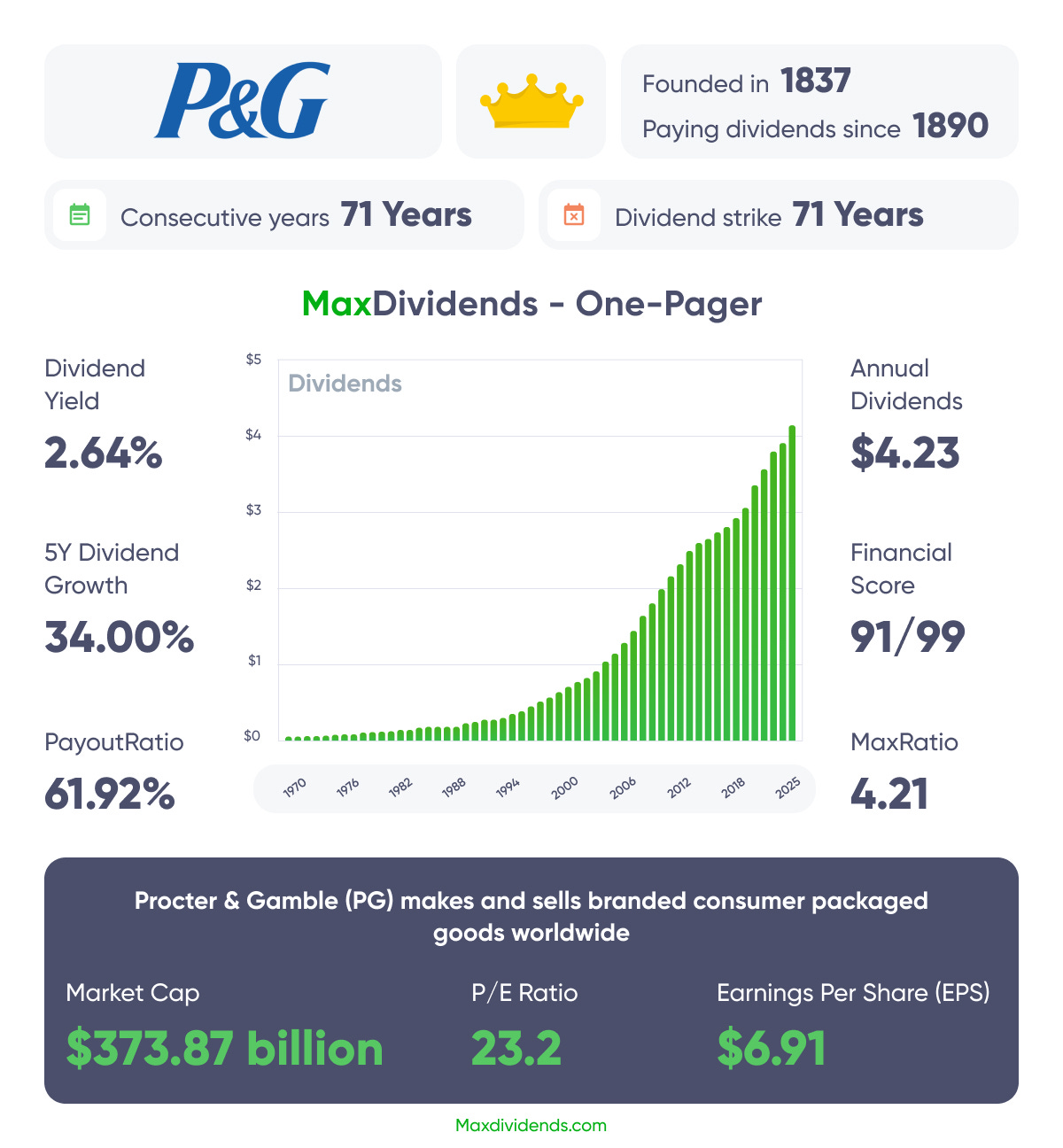
For 135 consecutive years, P&G has paid dividends, and for 69 straight years, it has increased them. In 2025, the dividend rose another 5%, with the stock currently yielding around 3%.
No dramatic swings, no bold promises — just a resilient business, expanding margins, and consistent cash flow that compounds over decades.
History of the Company
Procter & Gamble’s story began in 1837 in Cincinnati, Ohio, when English candlemaker William Procter and Irish soapmaker James Gamble—brothers‑in‑law—combined their small businesses to form a company producing candles and soap.
During the American Civil War, P&G supplied soap and candles to the Union Army, which helped expand its reach nationwide. In the late 19th century, the company introduced Ivory soap, a product that became famous for its purity and clever marketing.
Over the decades, P&G moved well beyond soap: it launched Crisco shortening in 1911, pioneered brand management in the 1930s, and introduced category‑defining products such as Tide laundry detergent in 1946, Crest toothpaste in 1955, and Pampers disposable diapers in 1961.
Through organic innovation and strategic acquisitions, P&G grew into one of the world’s largest consumer goods companies, with a global portfolio spanning household, personal care, and health brands.
A Proven Dividend King 👑
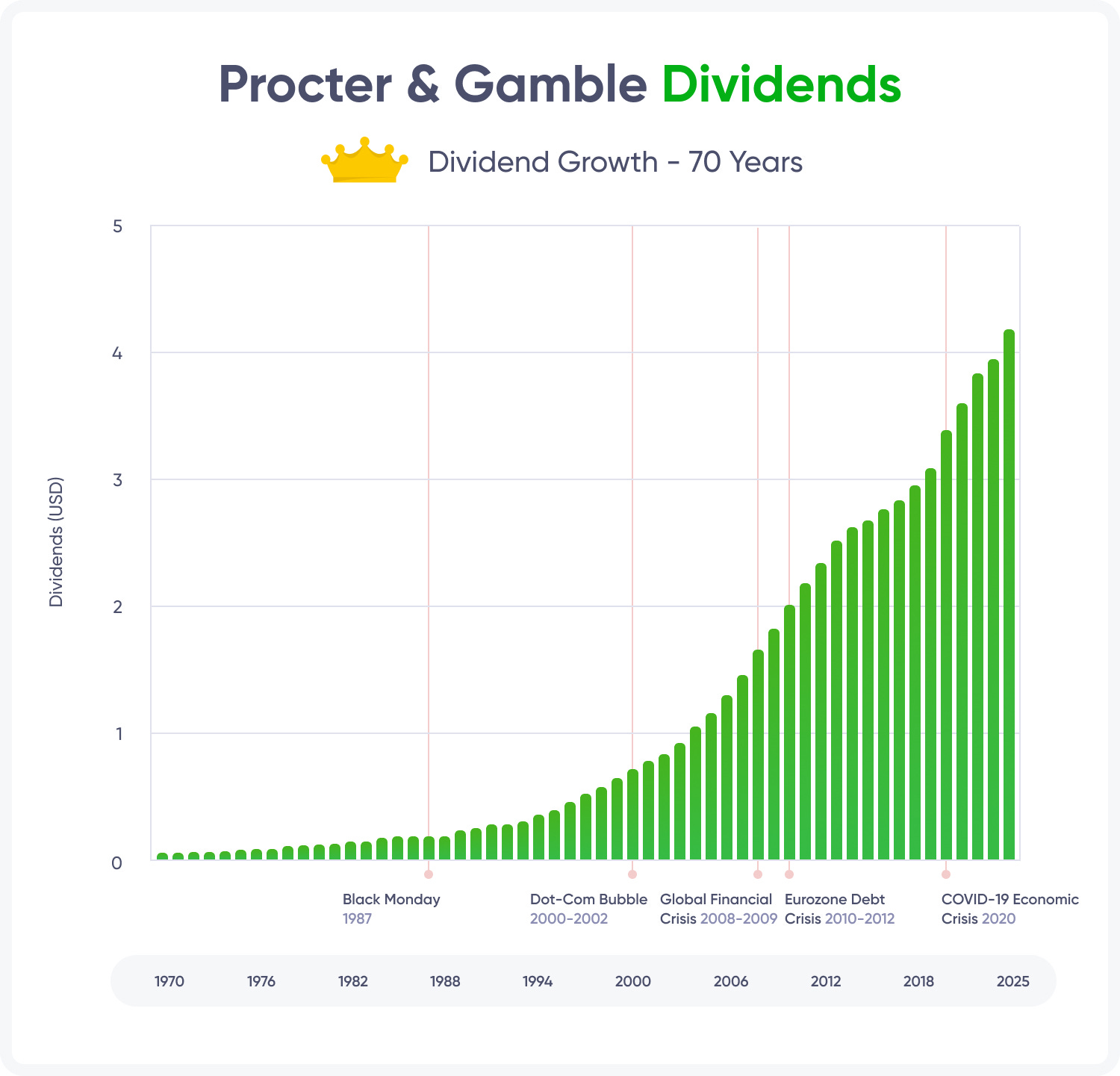
One of the defining features of Procter & Gamble’s shareholder proposition is its unusually long and uninterrupted dividend record. Since its incorporation in 1890, P&G has paid a cash dividend every single year for 135 consecutive years, making it one of the longest streaks in corporate history.
Moreover, the company has increased its dividend annually for 69 straight years, including a 5 % raise announced in 2025 that lifted the quarterly payout to $1.0568 per share.
This extended stretch of dividend growth underscores P&G’s commitment to returning cash to investors and reflects its ability to generate stable cash flow across economic cycles.
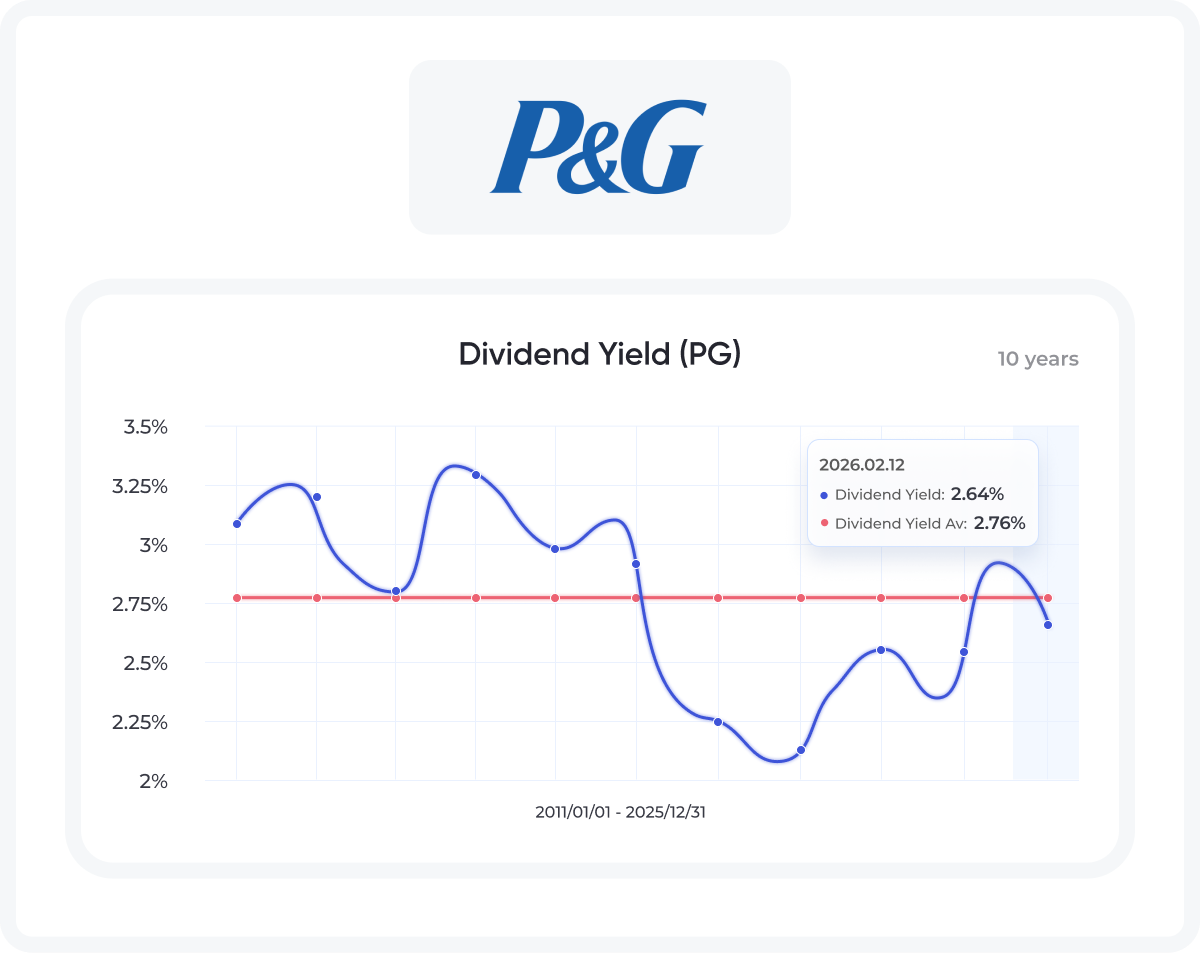
🟢 The current dividend yield of Procter & Gamble stands at 2.64%, closely aligned with its 10-year average of 2.76%.
In the MaxDividends app, open the 10-year yield band and set a price/yield alert to ping you when it drifts back into your buy zone.
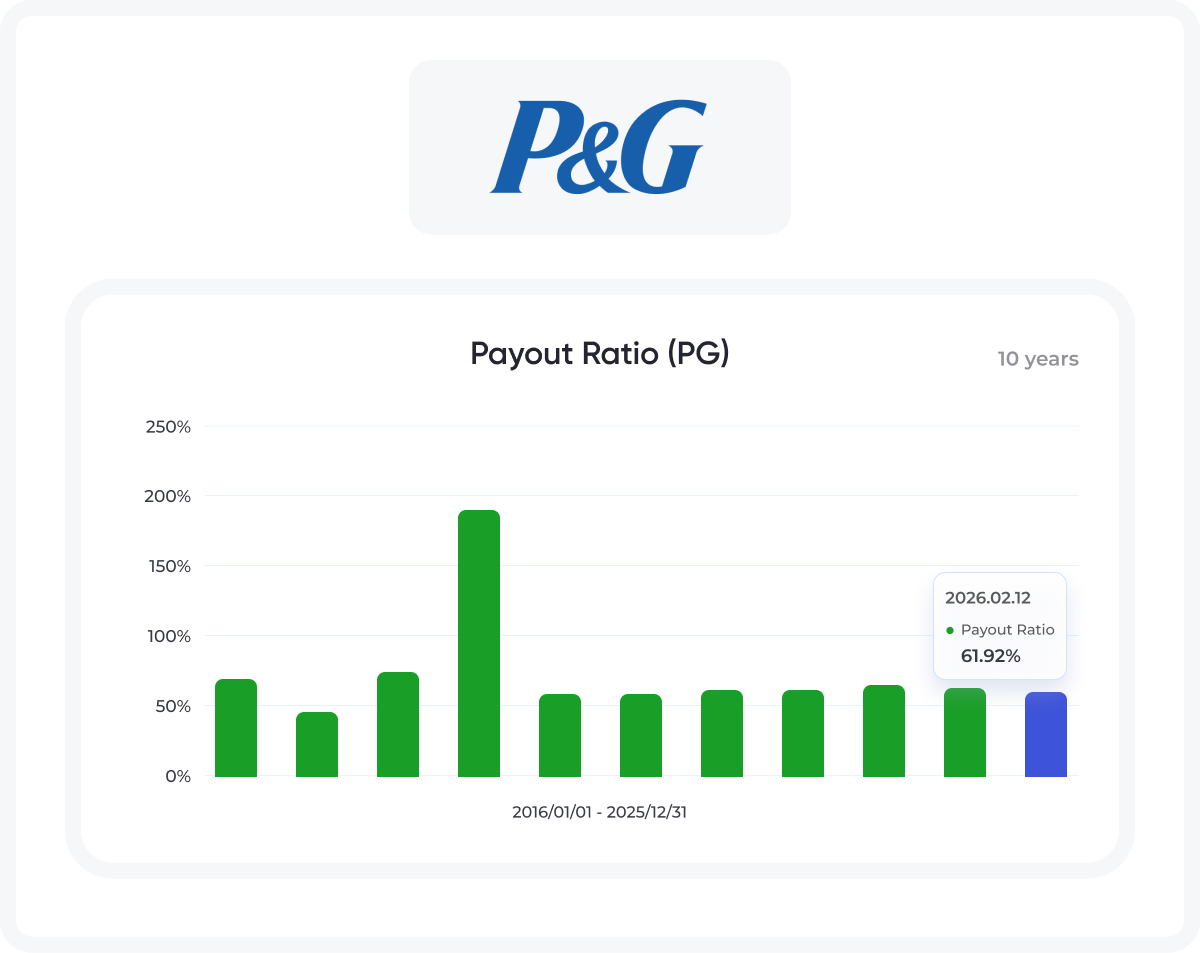
🟢 Current Payout Ratio 61,9%
This is a moderate level — Procter & Gamble comfortably covers dividends and still retains sufficient room for growth and reinvestment.
A payout ratio of about 62% signals solid dividend security: the company can easily fund dividend payments from its net earnings.
In the MaxDividends app, check the Payout Safety and forecast of future payouts to assess sustainability before purchasing or reinvesting.
Key Institutional Investors in Procter & Gamble
Procter & Gamble’s stock isn’t held randomly — big institutional players form a large, stable part of its shareholder base, reflecting confidence in the company’s steady cash flows and defensive business model.
Institutions own around 69 % of P&G’s outstanding shares, meaning professional money managers, asset managers, and large funds steer a big chunk of the stock’s ownership.
Among the largest institutional holders (based on the latest public filings):
Vanguard Group, Inc. – roughly 10 % of shares outstanding, the biggest single institutional position.
BlackRock, Inc. – around 7.7 %.
State Street Global Advisors – about 4.3 %.
Geode Capital Management, LLC – roughly 2.6 %.
Norges Bank Investment Management – around 1.4 %.
Other notable institutional names include Northern Trust, T. Rowe Price, Morgan Stanley, and UBS Asset Management, each holding smaller but still meaningful stakes.
What Makes Procter & Gamble Stand Out?
Procter & Gamble Company (NYSE: PG)
Financial Score: 91 / 99 ⭐️⭐️⭐️⭐️⭐️
Industry: Household & Personal Products
Dividend Increase - 71 Years
👉 Learn more about Financial Score
Procter & Gamble isn’t just about making everyday household products — it’s one of the world’s largest and most enduring consumer goods companies. Founded in 1837 in Cincinnati by William Procter and James Gamble, it started with candles and soap and has grown into a global powerhouse with hundreds of iconic brands spanning personal care, home care, and beauty.
What makes P&G stand out is its diversified product portfolio and brand-management expertise. The company doesn’t rely on a single hit — instead, it consistently sells essential products that people buy week after week, from Tide and Pampers to Gillette and Crest. This approach provides stable, predictable cash flow without needing explosive growth.
But here’s the twist: P&G isn’t just a “consumer goods company” in the traditional sense — it’s a precision cash-flow engine powered by decades of marketing know-how, global supply chains, and innovation. Its brands are deeply embedded in households worldwide, while the company continually adapts formulas, packaging, and marketing to maintain relevance.
This combination of trusted products, global scale, and operational excellence allows P&G to consistently grow earnings, pay reliable dividends, and remain a core holding for investors, all while navigating a competitive and ever-changing market.
Procter & Gamble - Quick MaxDividends Team Overview
🟢 Analysis of recent reports shows that the company is currently profitable.

🟢 The business is expanding its sales footprint, and revenue continues to rise — that’s encouraging.

🟢 Positive trends in operating profit suggest the company is building a strong margin of safety.

🟢 EPS is trending up, and that’s a healthy signal. The company’s doing a solid job at driving long-term profitability.

🟢 Well-managed, stable, and profitable — this company has proven itself over time.
Historical Context
Procter & Gamble has a long-standing tradition of paying dividends, with an unbroken streak of 135 consecutive years, including 71 years of consecutive increases:
Most recent dividend: $1.0568 per share, declared October 17, 2025, with an ex-dividend date of November 5, 2025, and a payment date of December 1, 2025.
Previous dividend: $1.005 per share, paid out following the November 5, 2024 ex-dividend date.
This history highlights P&G’s commitment to returning cash to shareholders consistently, making it a reliable choice for income-oriented investors.
Financial Statement
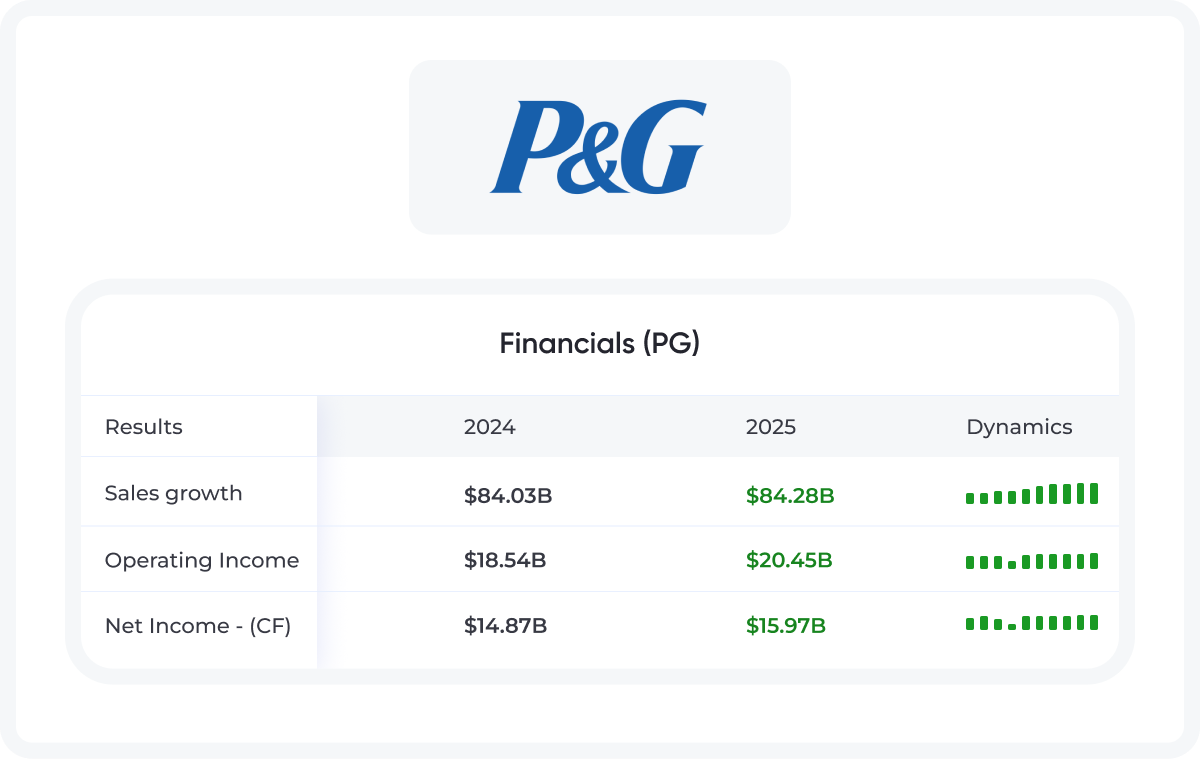
👉 Looking at Procter & Gamble’s numbers, revenue and net income have shown steady growth in recent years, supported by a diversified product portfolio and global market presence.
Operating margins remain healthy, and net income rose 20% year-over-year in the first quarter of fiscal 2026, reflecting strong pricing power and operational efficiency.
For dividend investors, this is a green flag: profits comfortably cover payouts, and management continues to deliver consistent cash flow even amid rising raw material and logistics costs.
📱 In the MaxDividends app, this snapshot highlights how P&G converts household demand and scale into reliable earnings—exactly the type of financial strength that underpins a long-term dividend track record and shareholder value.
If you want to stay on top of your portfolio’s health, don’t forget to check in on the financials of the companies you’ve invested in. The better shape they’re in, the better your results will be. Keep an eye on their quarterly and annual reports to see how they’re performing.
The strongest and most stable companies tend to have a Financial Score of 80+, with the very best ones hitting 90+. If you see that score start to dip below 80, that’s your cue to consider jumping ship before things get worse.
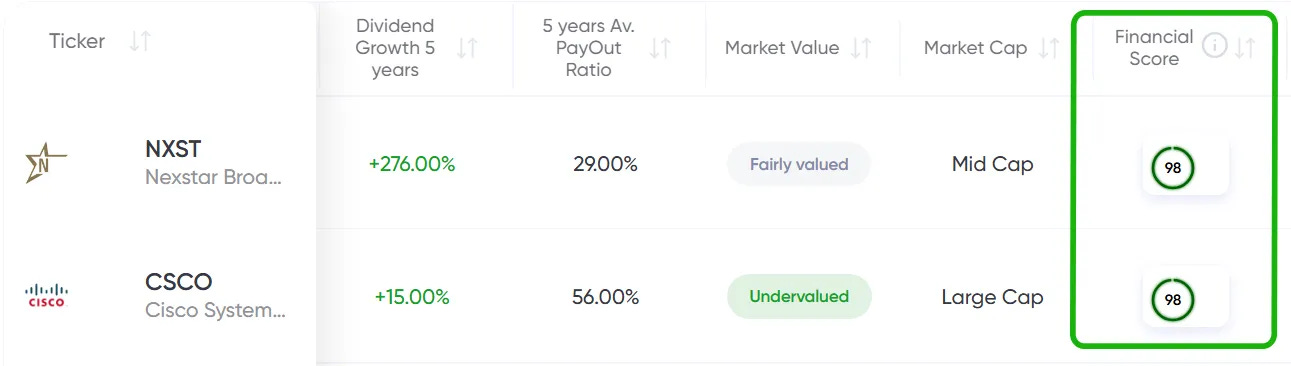
👉 Learn More about Financial Score

Our Premium Members get access to a curated watchlist of 19,000 companies worldwide, all scored by our team on a regular basis. Companies like Procter & Gamble are on that list, too.
Future Growth Prospects for Procter & Gamble
Looking ahead, Procter & Gamble’s growth is expected to remain steady and resilient, fueled by product innovation, brand strength, and global expansion.
The company continues to invest in premium and sustainable product lines, responding to changing consumer preferences in personal care, home care, and wellness categories.
Emerging markets, where middle-class populations are growing, present additional opportunities for sales growth. On top of that, P&G is leveraging digital marketing, e-commerce, and data-driven consumer insights to boost efficiency and capture market share.
While P&G isn’t chasing explosive growth, its combination of trusted brands, operational scale, and innovation pipelines positions the company to deliver consistent revenue and earnings expansion—and to keep rewarding shareholders with reliable dividends for years to come.
Why Invest in P&G?
Global consumer goods leader with hundreds of iconic household brands
135 years of consecutive dividend payments, including 71 years of annual increases, demonstrating strong shareholder commitment
Steady financial performance with healthy operating margins and robust free cash flow
Diversified product portfolio spanning personal care, home care, and beauty, ensuring consistent demand
Strong brand-management expertise enables scalable growth and efficient global operations
Strategic expansion in emerging markets supporting revenue diversification and long-term growth
Focus on sustainable and innovative products, including eco-friendly packaging and responsible sourcing
Significant institutional ownership (~69%), signaling market confidence and stability
Reliable long-term growth potential through brand innovation, premium product lines, and global market reach.
Interesting Fact
Procter & Gamble isn’t just a century-old dividend machine — it has quietly reinvented how households use everyday products.
Take Tide Pods: when they launched in 2012, they didn’t just simplify laundry — they created an entirely new product category that quickly became a cultural phenomenon.
Or consider Pampers: P&G pioneered disposable diapers in the 1960s, transforming childcare routines worldwide. What’s fascinating is that behind these seemingly simple household items lies a decades-long obsession with consumer behavior, tiny innovations, and relentless testing.
Every bar of soap, every bottle of shampoo, every cleaning wipe is the result of thousands of small experiments — a reminder that P&G’s real “secret ingredient” is its system for turning ordinary products into indispensable daily staples.
Competitors
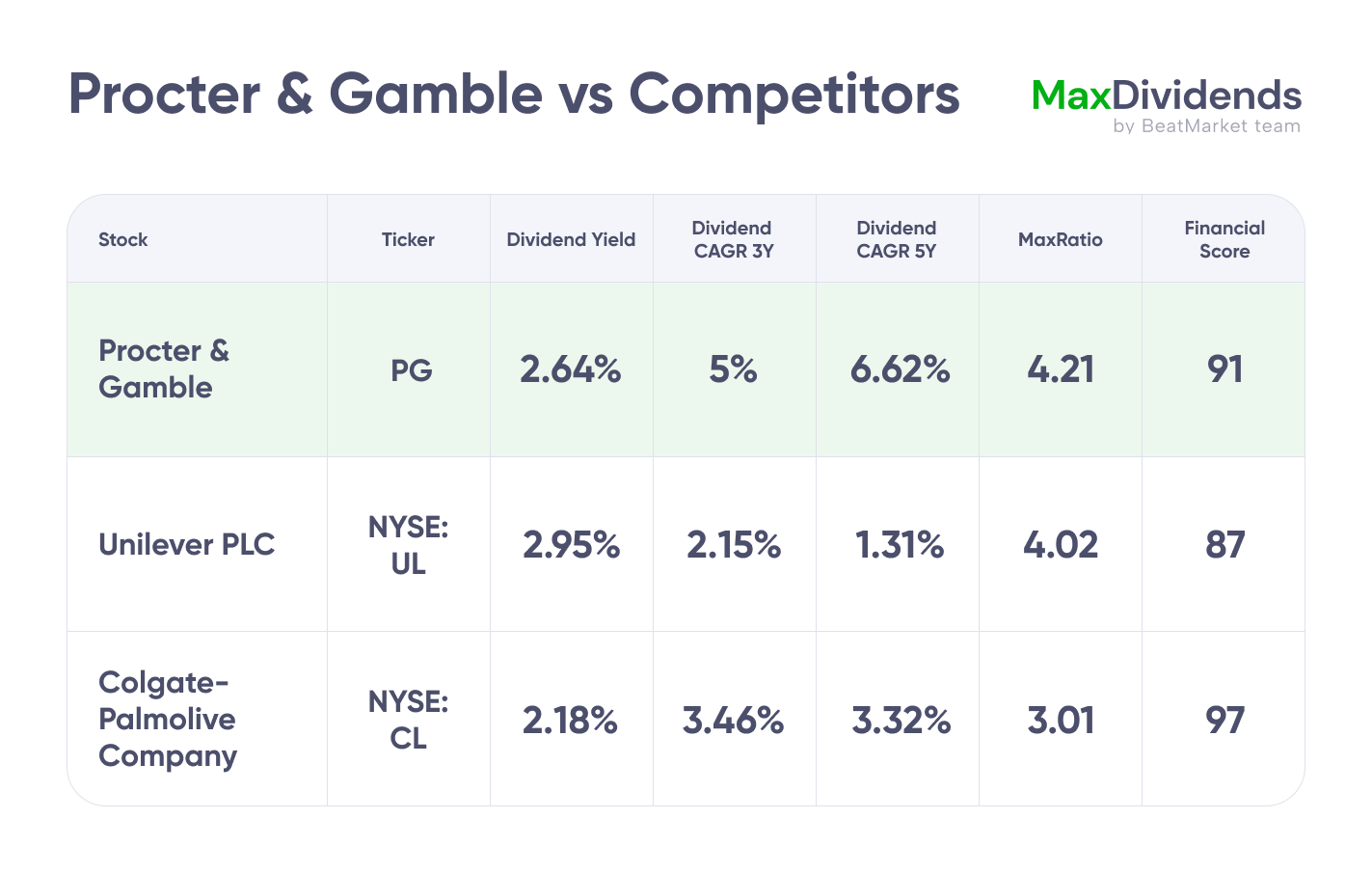
1. Unilever PLC (NYSE: UL)
Financial Score: 87 / 99
Industry: Household & Personal Products
Unilever is a global consumer goods company with a diverse portfolio of brands in personal care, home care, and foods. It competes directly with P&G across categories such as cleaning products, shampoos, and skincare. Like P&G, Unilever focuses on brand innovation, sustainability initiatives, and global market expansion, making it a major player in household staples.
2. Colgate-Palmolive Company (NYSE: CL)
Financial Score: 97 / 99
Industry: Household & Personal Products
Colgate-Palmolive specializes in oral care, personal care, and home care products, directly challenging P&G’s brands like Crest, Gillette, and Palmolive. The company leverages strong brand recognition and global distribution, emphasizing innovation and emerging-market growth as it competes for the same consumer base.
Final Thoughts
Procter & Gamble (PG) stands out with:
135 years of consecutive dividend payments, including 69 years of annual increases, demonstrating exceptional reliability for shareholders.
A moderate payout ratio (~60–65%), leaving room for reinvestment in innovation, marketing, and global expansion.
A forward yield of around 3%, supported by steady cash flow and resilient demand across household, personal care, and beauty products.
Solid long-term growth potential, fueled by trusted brands, emerging-market expansion, and continuous product innovation, though tempered by the mature nature of the consumer staples sector.
Key Takeaways
Procter & Gamble (PG) is well-suited for investors seeking consistent dividend growth and long-term capital preservation rather than immediate explosive returns. Its combination of diversified product portfolio, global scale, and operational excellence provides both income reliability and steady growth potential.
Undervalued \ Overvalued \ Fairly Valued ?
Compare the P/E ratios of competitor companies to assess whether the stock you’re considering is overvalued. We calculate the average P/E among competitors as a benchmark.
If a company’s current P/E is 20% or more below the competitor average, it is considered undervalued.
If it is 20% or more above, it is considered overvalued.
The P/E ratio is calculated by dividing the market value per share by earnings per share (EPS).
⚪️ Fairy valued

Analysts Consensus
Based on the analyst consensus data, Procter & Gamble maintains a strong “Buy” rating, supported by a average 12-month price target of $170.86. This target suggests a potential upside of 6.79% from current levels.
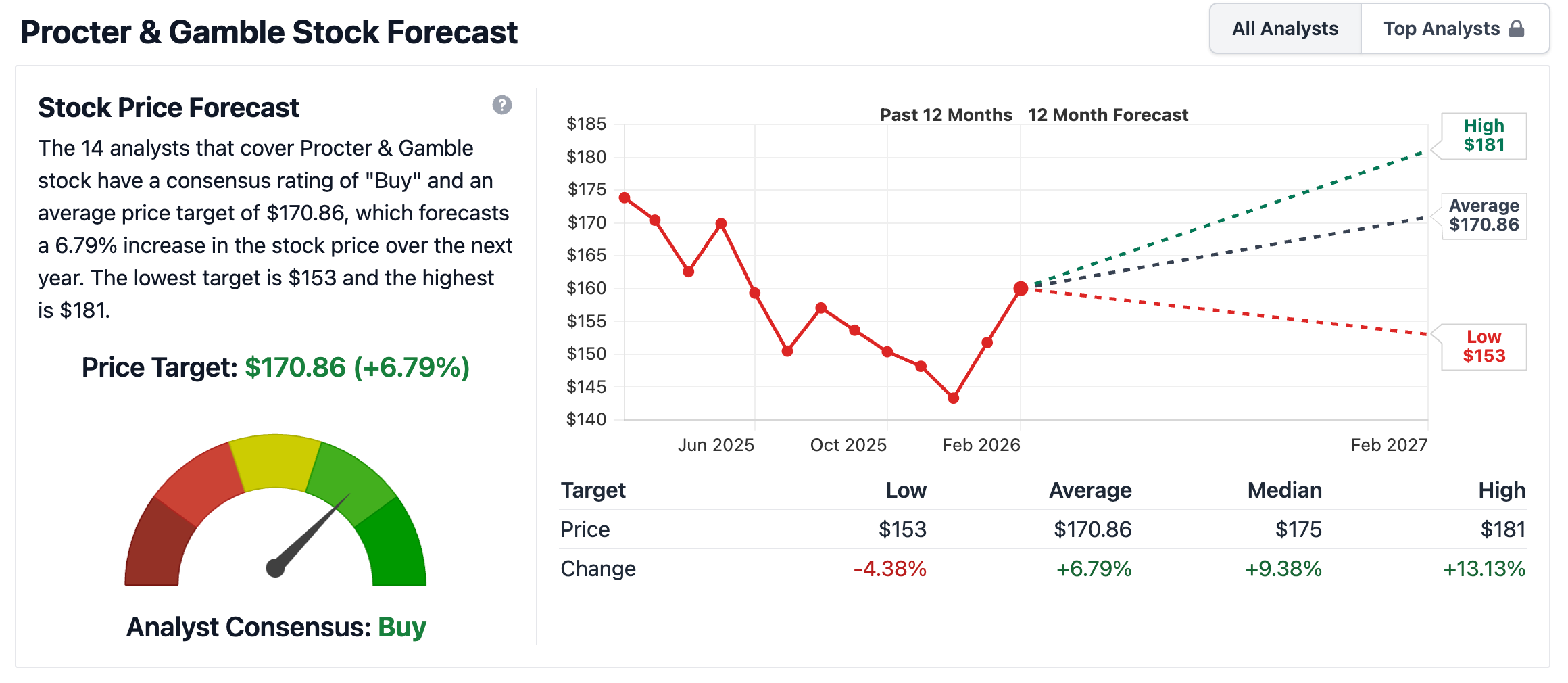
The overall forecast range varies from a low estimate of $153 to a high of $181, reflecting generally positive sentiment among the 14 analysts covering the stock.
To your wealth, MaxDividends Team
More Dividend Ideas
⭐️ Get Full Access to Our Top Dividend Picks ⭐️
Get instant access to the MaxDividends Income System & App + Top Undervalued Dividend Picks.