


Warren Buffett once said something that gets repeated so often it can start to feel like background noise: “The stock market is a device for transferring money from the impatient to the patient.”
Most investors agree with that in theory. In practice, though, they often do the exact opposite. The real challenge for investors today is not access to information. It is financial maturity — the ability to stay calm, stay disciplined, and stay invested when markets behave exactly the way markets always behave: with noise, fear, and sudden swings.
Markets reward those who stay
If history has taught investors anything, it is this: markets do not reward the smartest people, the fastest traders, or the loudest voices on television and social media. They reward the people who survive long enough for compounding to do its job.
Every great wealth story is, at its core, a story of patience. Compounding does not come from constant action. It comes from not interfering when time is already working in your favor. Charlie Munger captured that perfectly when he said: “The big money is not in the buying and selling, but in the waiting.”
And yet, waiting has become harder than ever.
The post-2020 investor
To understand investor behavior today, you have to understand the market environment that shaped it.
The early 2020 crash was a shock that reset expectations for an entire generation of investors. Markets fell hard, fear took over, and quality companies were suddenly on sale in a way that looked almost unreal.
Then came the recovery, and that recovery changed behavior just as much as the crash did.
It was not a normal recovery. It was fast, sharp, and emotionally disorienting. Markets bounced back in a way that taught many investors the wrong lesson: that corrections are temporary, recoveries are quick, and waiting too long means missing the move. That lesson is incomplete, and in many cases, dangerously misleading.
A new generation of investors came of age during this period. Many saw small and mid-cap portfolios jump sharply in a very short time. That was not mastery. It was an unusual market setup. But because it felt so easy, it quietly rewired expectations.
Why small falls feel huge now
In the past, bull and bear markets often played out over longer stretches. Today, everything feels compressed. Markets can swing violently within weeks, and sentiment can flip even faster.
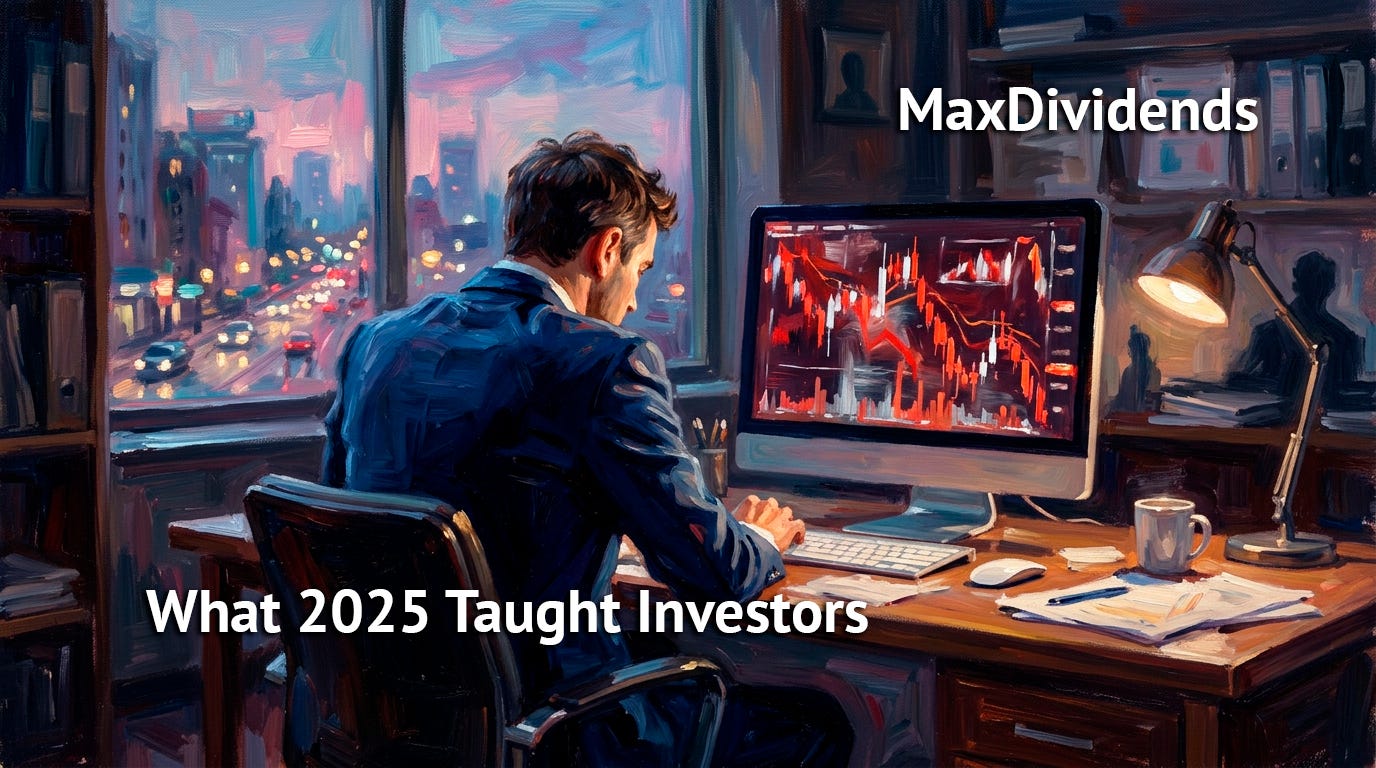
On paper, annual returns may look ordinary. But inside the year, the emotional experience can be brutal.
That is why even a routine decline can feel like a crisis. Investors pause SIPs. They sell to “be safe.” They make decisions not because businesses have weakened, but because emotions have taken control.
Ironically, this is exactly when patience matters most.
Recent market behavior has shown a familiar pattern: falls can be fast, and recoveries can be just as fast. Panic sellers rarely benefit from that. Investors who stay in the game usually do.
That kind of maturity does not come from flashy online courses or short-form investing content. It comes from experience, and from understanding that fear is part of the journey, not a reason to quit.
Staying invested does not mean staying blind
One important clarification matters here: staying invested does not mean never booking profits.
A profit is only a profit when it reaches your bank account. Financial maturity is about balance, not stubbornness.
When markets rise sharply over short periods, it can make sense to rebalance. Reduce excess risk. Bring exposure back to a level you can actually live with. At the same time, keep your SIPs going. Keep the engine running.
Going all in or all out is rarely wise. Markets do not reward extremes. They reward process.
SIPs and the illusion of control
There is always a debate about SIP timing: monthly, weekly, daily, salary day, or something else entirely. These are tactical choices. Over long periods, they matter far less than people think.
What destroys wealth is not picking the wrong date. It is stopping altogether.
The uncomfortable truth is that the best SIP units are often bought during periods of fear. And those are exactly the periods when investors feel least confident about continuing.
That is why discipline matters. Not because the market makes you comfortable, but because it does not.
The question most investors forget to ask
Before discipline, before patience, before portfolio construction, there is a question many investors avoid: Why am I investing?
That question matters because most people are not investing surplus money. They are investing by cutting back on desires, and sometimes even on comfort. That makes volatility emotionally expensive.
If you are investing for a child’s education, for retirement, or for a future goal years down the line, your behavior has to match that timeline.
Markets will test patience over and over during that period. That does not mean the plan is broken. It means the plan is being tested.
Financial maturity is the ability to connect market cycles with life cycles, and not confuse temporary discomfort with permanent failure.
Markets reward maturity
Despite wars, inflation scares, political uncertainty, and constant pessimism, markets have continued to rise over long periods. Not smoothly. Not politely. But consistently.
Those who stayed invested through downturns were rewarded. Those who exited in panic often came back later at higher prices, paying the tax of fear.
As Buffett reminds us: “Only buy something you’d be perfectly happy to hold if the market shut down for ten years.” That mindset is not bravado. It is preparation.
Literacy versus maturity
Financial literacy teaches you what an SIP is, how compounding works, and where to invest.
Financial maturity teaches you when not to stop, when not to panic, and when not to react.
One helps you enter the market. The other helps you stay long enough to benefit from it.
In reality, wealth is rarely destroyed by terrible investments alone. It is often destroyed by good investments abandoned too early.
The final thought
Markets will fall again. Corrections will come again. Fear will return again.
The question is not whether that will happen. The question is whether investors will be mature enough to stay.
Because markets do not reward intelligence alone. They reward patience. They reward discipline. They reward those who remain standing.
In investing, staying alive is half the victory. The other half is having the maturity to wait.
Remember: financial literacy helps you enter the market. Financial maturity helps you stay rich.
Someone’s sitting in the shade today because someone planted a tree a long time ago. ― Warren Buffett.
Learn the MaxDividends Way
Start Here
🔑 Explore the Premium Hub (exclusive — upgrade to unlock)
Guides & Step-by-Step
Deep Insights
📖 I ❤️ Dividends: Why I Believe Dividend Investing Is the Best Strategy | E-Book
How Effective is the MaxDividends Strategy for Building Growing Passive Income
Help & Support
Got a question about dividends? Ask Max, your AI Dividend Assistant!
Didn’t get the answer you need? Reach out: max@maxdividends.app or team@maxdividends.app — we’ll help you out.