


Plenty of young folks fall for this line of thinking: “Why live like I’m broke today if I’ll be rich tomorrow?” It sounds clever—until life throws a curveball and that rich future turns into maxed-out credit cards and repo notices.
That mindset? It’s called consumption smoothing in economics. The idea is to maintain a steady lifestyle throughout life, borrowing when young (when your income’s low) and saving when older (when your income’s higher). In theory, it’s math. In practice? It’s a trap.
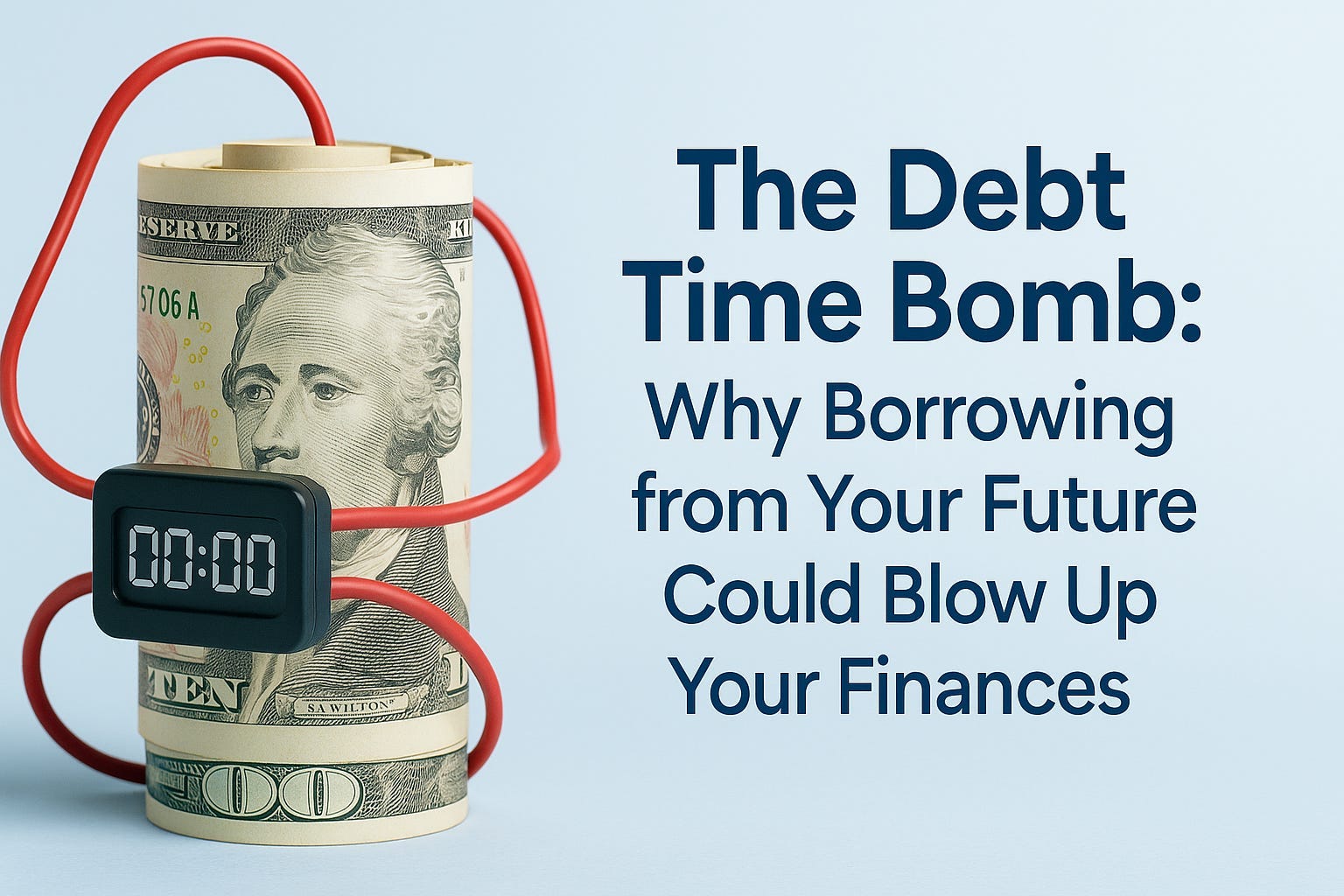
The Lie We Tell Ourselves: “Future Me Will Handle It”
You assume you’ll earn more in the future. So you swipe your card now, take that car loan, delay saving for retirement, and promise to make up for it later.
But here’s the kicker: you have no idea what your future earnings will be. One layoff, recession, or medical bill—and your whole plan blows up. Suddenly, you’re 35 with a repo’d car, credit card debt up to your eyeballs, and a resume that doesn’t scream “promotion-ready.”
And if you were counting on your car to get to work? You’re now jobless and in debt. That’s how debt snowballs and swallows futures.
The Investment Twist: Leverage Sounds Smart—Until It Isn’t
Let’s talk investing. There’s a book called Lifecycle Investing that says young investors should go all-in on stocks—and even use leverage—because historically, that’s how you get the biggest gains.
And hey, if you had dumped money into a 3x leveraged S&P 500 fund back in 2010, you’d be up nearly 2,000% by now.
But here’s the fine print: that strategy only works if the market doesn’t crash. If you tried it in 2008, 2000, or 1929, you’d be wiped out. In March 2020 alone, some 3x funds dropped 77% in days.
Today? That same 3x fund is still down 33% from its all-time high.
Math vs. Mayhem: The Real Risk of Leverage
Sure, on paper, leveraged portfolios outperform traditional ones over 30 years—except during catastrophic events like the Great Depression. But unless you’ve got a crystal ball that guarantees no economic apocalypse in the next three decades, you’re playing Russian roulette with your future.
Even Warren Buffett, the GOAT of investing, kept leverage moderate—about 1.6 to 1. And he just stepped down from Berkshire Hathaway. If Buffett didn’t trust heavy leverage, why should you?
The Buffett Rule: Just Survive
Meb Faber said it best: “Just survive.” Sounds boring, but that’s the point. The winners in this game aren’t always the ones swinging for the fences—they’re the ones who stay in the game.
Aggressive leverage and YOLO debt can look brilliant in bull markets. But when things go south? The same bets turn into bankruptcy.
Bottom Line: Don’t Borrow What You Haven’t Earned Yet
Debt assumes a future you can’t guarantee. Leverage assumes a market that never tanks. Both make you fragile.
The real flex? Financial resilience. That means saving now, investing consistently, and never betting the farm on tomorrow.
Because tomorrow isn’t promised—but your debt collector sure is.
Someone’s sitting in the shade today because someone planted a tree a long time ago. ― Warren Buffett.
Learn the MaxDividends Way
Start Here
🔑 Explore the Premium Hub (exclusive — upgrade to unlock)
Guides & Step-by-Step
Deep Insights
📖 I ❤️ Dividends: Why I Believe Dividend Investing Is the Best Strategy | E-Book
How Effective is the MaxDividends Strategy for Building Growing Passive Income
Help & Support
Got a question about dividends? Ask Max, your AI Dividend Assistant!
Didn’t get the answer you need? Reach out: max@maxdividends.app or team@maxdividends.app — we’ll help you out.