


The S&P 500, Dow Jones Industrial Average, and Nasdaq Composite have all set records in 2026, driven largely by an AI capital-spending boom, but volatility has resurfaced. The S&P 500 dropped roughly 9% in March before rebounding 11% off its late-March low, and by early September, oil prices were climbing again on renewed U.S.-Iran strikes, pushing the 10-year Treasury yield to its highest level since January 2025.
Inflation concerns tied to tariffs and oil, elevated rate expectations, and a market where the Buffett Indicator has surpassed 233%—the highest level on record—are adding to the case for caution. It’s unclear when the next broad decline will begin, but Warren Buffett, now 96, has offered a consistent framework for this kind of environment.
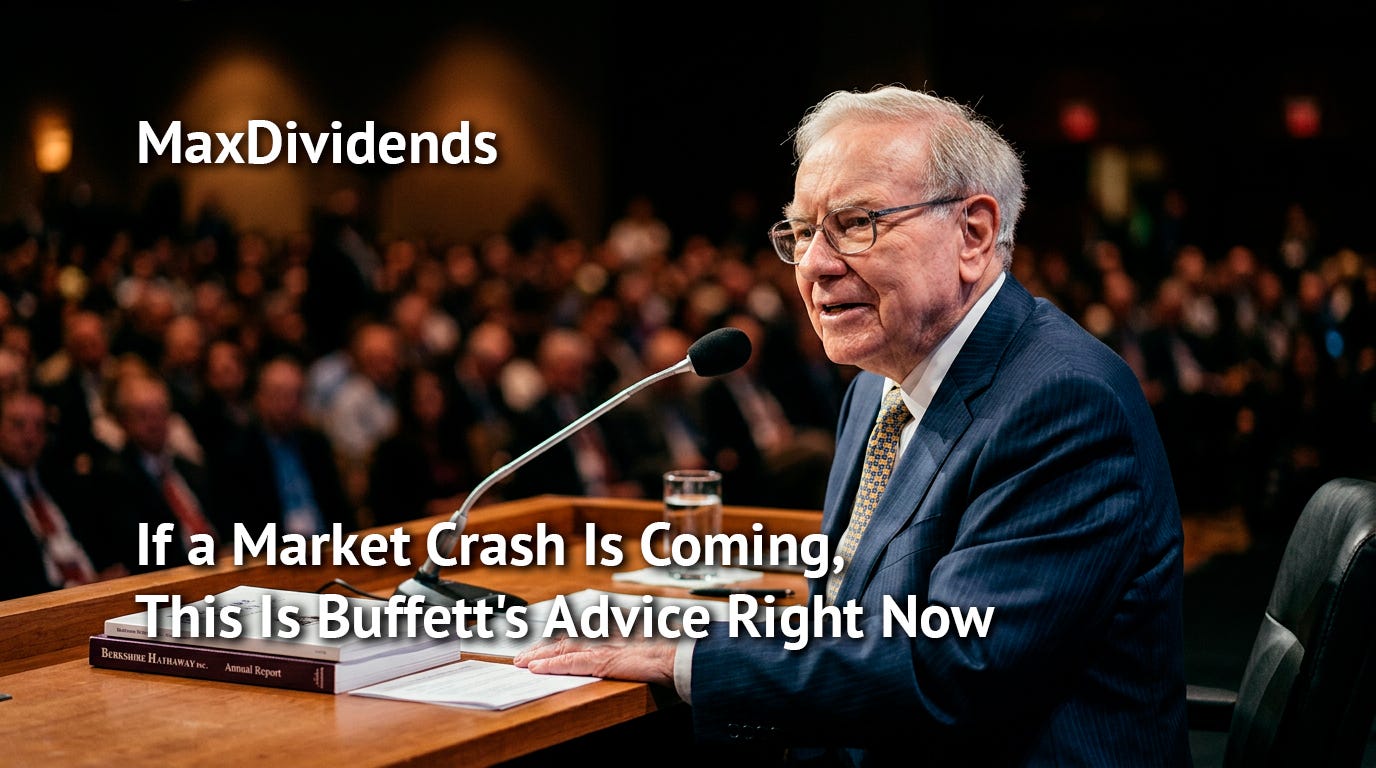
Bad News Historically Precedes Opportunity
In October 2008, with the S&P 500 down more than 40% over the prior year, Buffett wrote in The New York Times that bad news is an investor’s best friend because it allows a buyer to acquire a stake in future earnings at a discounted price. He argued that while some companies would not survive a downturn, fears about the long-term prosperity of the market’s sound businesses were generally overstated, since most would set new profit records in the years that followed.
The S&P 500 has risen roughly 1,000% since that article was published, and the largest gains accrued to investors who continued buying through the period of maximum pessimism.
Buffett’s Current Position
Buffett’s actions in 2026 reflect the same framework applied selectively rather than uniformly. Berkshire Hathaway held a $373 billion cash position as of April and stated it would deploy capital only in the event of a substantial decline, characterizing the year’s pullbacks as insufficient to act on: “Three times since I’ve taken over Berkshire, it’s gone down more than 50%. This is nothing”.
By July, Buffett described difficulty finding value in a market he characterized as dominated by speculative behavior: “It’s tough to find value when everybody is preferring gambling”. Berkshire nonetheless returned to net buying in the second quarter of 2026 after 14 consecutive quarters as a net seller, indicating selective purchases rather than broad withdrawal from the market.
What the Data Suggests About Staying Invested
Historical drawdown data supports a consistent conclusion: time in the market has outweighed attempts to time the market across every major downturn on record. Exiting ahead of a possible decline risks forfeiting gains if the market continues higher instead, an outcome that has occurred more often than not across multi-year periods.
Buffett’s 2008 observation about investor behavior during the 20th century’s Dow rally remains directly applicable: “The hapless ones bought stocks only when they felt comfort in doing so and then proceeded to sell when the headlines made them queasy”. His stated approach—accumulating shares over long periods and avoiding sales during periods of negative headlines—has applied across the market cycles he has managed through, including the current one.
The Takeaway
Elevated valuations, geopolitical risk from the Iran conflict, and rising yields are legitimate reasons for near-term caution, and Buffett’s own posture—holding record cash reserves and buying selectively—reflects that caution rather than blanket optimism. At the same time, his long-standing framework treats broad market declines as a function of price adjustment rather than a signal to exit, with historical data showing that sustained withdrawal from equities has more often cost investors returns than protected them. The distinction in his current messaging is between avoiding overpriced speculation and abandoning long-term equity exposure altogether.