

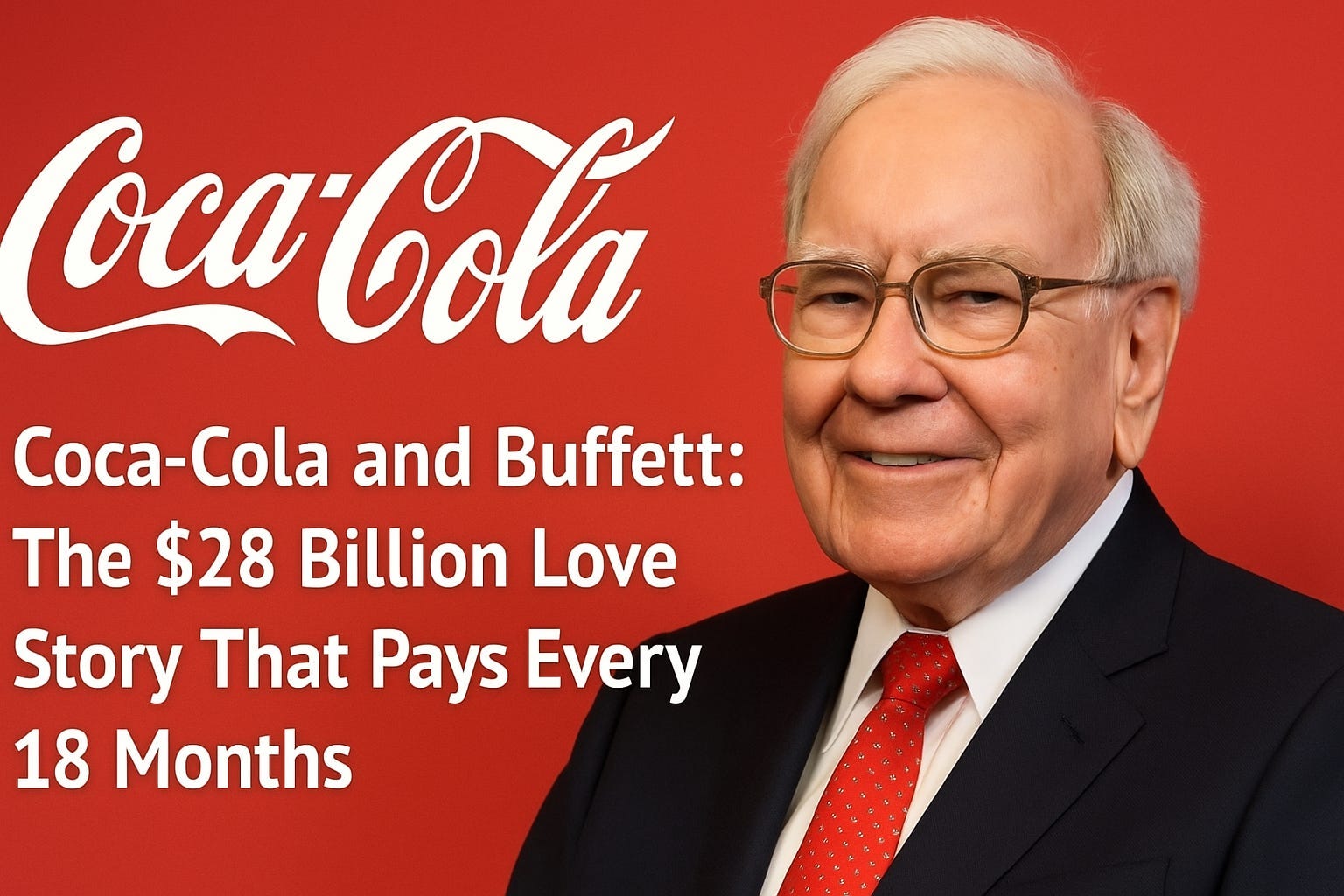
Back in the late ‘80s, Warren Buffett made one of the most iconic investment moves of his career. No flashy tech, no high-flying startups—just Coca-Cola. Nearly 40 years later, that call is still paying off, literally, with Berkshire Hathaway now collecting $848 million in dividends per year from a stock Buffett hasn’t touched since the Clinton administration. Let’s break down how one of the most boring stocks in the world became a dividend machine on autopilot, turning sugar water into a cash-printing empire.
How It Started: A $3.25 Bet on Sugar and Brand Power
Buffett started scooping up Coca-Cola stock right after the 1987 market crash. By 1994, he’d built a massive position at an average cost of just $3.25 per share. Back then, Coke was trading at a P/E of around 12–15, and earnings were steadily climbing—from $0.15 per share in 1987 to $0.50 by 1994, adjusted for splits.
But the real juice came in the 1990s. With global markets opening up and American brands booming overseas, Coke’s earnings and share price exploded. From 1991 to 1998, the stock ran from $10 to over $44. Anyone trying to sell “because it looked expensive” would’ve missed that rocket.
Why He Never Sold: Taxes and the Dividend Advantage
Yes, Coca-Cola traded at a P/E above 30 in 1998. And sure, the “smart move” might’ve been to sell. But here’s the thing—Buffett isn’t just smart. He’s strategic. If Berkshire had sold its stake at the peak in 1998 (around $43/share), it would’ve faced a 35% corporate tax on the gains. That’s a $14 haircut on every $40 gain. On top of that, Berkshire owned over 400 million shares—trying to offload that much without tanking the price? Not gonna happen. But here’s the kicker: as a corporation, Berkshire doesn’t get a tax break on capital gains. It does, however, get a sweet dividends received deduction. So keeping the stock made more sense than locking in taxes and scrambling for a reinvestment plan.
The Power of Doing Nothing: $29+ Per Share in Dividends
Since 1994, Berkshire has pocketed over $29 per share in Coke dividends (source). And that cash hasn’t just sat idle—it’s been funneled into Apple, Chevron, and other Buffett favorites at high rates of return. Meanwhile, he never had to touch the Coca-Cola principal.
As of April 2, 2026, Coke trades at $76.08. That’s a gain of over 2,300% on his cost basis—not even counting dividends. But here’s the best part: Coke now pays $2.12 per share annually (Yahoo Finance — KO Dividend), which gives Buffett a yield on cost of 65.23%. Let that sink in: he gets his entire original investment back every 18 months, just from dividends.
Buffett’s $28 Billion Thirst Quencher
Today, Berkshire’s stake in Coca-Cola is worth nearly $28 billion and generates about $848 million per year in dividends (MarketBeat — KO). That’s not just income—it’s consistency, predictability, and tax-advantaged cash flow. Could he have made more elsewhere? Maybe. But Coca-Cola has been a reliable ATM, paying out decade after decade. And because he left it untouched, those dividends got deployed into other long-term winners—without ever facing capital gains tax.
Conclusion: The Ultimate Buy-and-Hold Case Study
Buffett’s Coca-Cola play isn’t just a win. It’s a masterclass in patience, taxes, and dividend compounding. In a world chasing the next hot stock, he bet on sugar water, branding, and a rock-solid balance sheet—and turned it into an unstoppable income engine. Sometimes the smartest move is doing nothing at all—especially when you’re getting paid 65% a year to hold your ground.
Someone’s sitting in the shade today because someone planted a tree a long time ago. ― Warren Buffett.
Learn the MaxDividends Way
Start Here
🔑 Explore the Premium Hub (exclusive — upgrade to unlock)
Guides & Step-by-Step
Deep Insights
📖 I ❤️ Dividends: Why I Believe Dividend Investing Is the Best Strategy | E-Book
How Effective is the MaxDividends Strategy for Building Growing Passive Income
Help & Support
Got a question about dividends? Ask Max, your AI Dividend Assistant!
Didn’t get the answer you need? Reach out: max@maxdividends.app or team@maxdividends.app — we’ll help you out.