


It runs a classic regulated grid across two Midwestern states, the kind of business that used to be judged purely on how boring and predictable it stayed. Lately that reputation has flipped a bit: massive new electric service agreements from data center customers are reshaping its growth outlook, and management now talks about multi-gigawatt demand the way utilities used to talk about slow population growth. The dividend has climbed for 22 straight years through all of it.
Alliant Energy (LNT)
Financial Score: 85 / 99
Quick Tip
To keep your portfolio strong, stay on top of the financials for each company you hold. Solid companies mean better returns, so be sure to check in on their quarterly and annual numbers.
—
Interesting stocks usually score 80+ on the Financial Scale, with top players hitting 90+. If that score dips below 80, it might be a good time to consider cutting ties before things take a turn.
Alliant Energy Corporation (LNT) is a Madison, Wisconsin-based holding company for regulated electric and natural gas utilities serving customers in Iowa and Wisconsin through its Interstate Power and Light (IPL) and Wisconsin Power and Light (WPL) subsidiaries. The business model is straightforward: invest in generation, transmission, and distribution infrastructure, then recover those costs plus an approved return through regulated rates set by state commissions.
Dividend engine: 22 years, steady climb
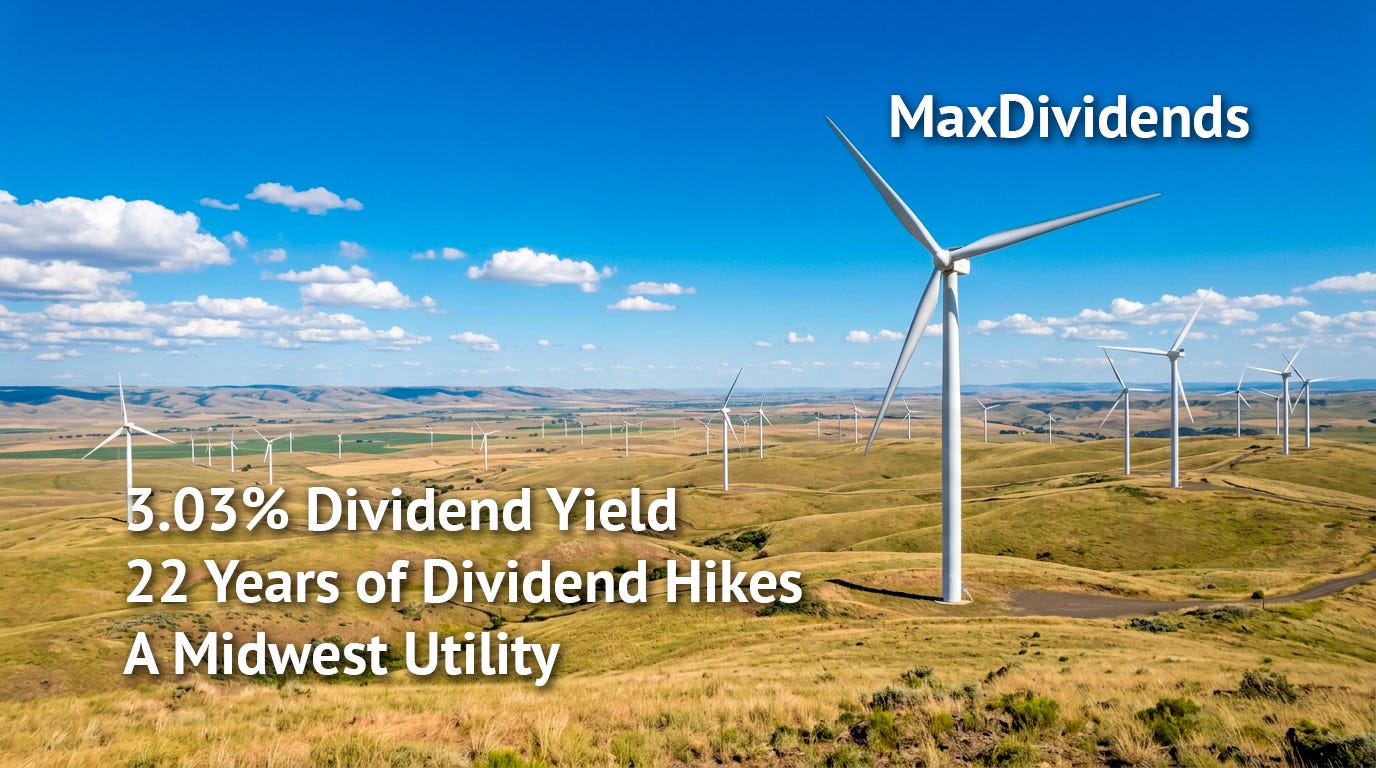
Alliant Energy pays $2.14 per share annually, a 3.03% yield, with a 67.72% payout ratio and a 5-year dividend-growth rate of +34.00%. That payout ratio sits in a comfortable middle zone for a regulated utility, leaving room to keep funding a massive capital plan without straining the balance sheet. The 22-year streak of hikes reflects a business built for consistency, with earnings tied to rate case outcomes rather than commodity price swings, and management has already reaffirmed its long-term target of 5–7% annual earnings growth.
Q2 2026: a miss, but guidance holds firm
For the second quarter ended June 30, 2026, Alliant Energy reported GAAP earnings per share of $0.65, down from $0.68 a year earlier, with net income of $170 million versus $174 million, per the July 30, 2026 press release on BusinessWire. Total revenues rose 1.04% to $971 million from $961 million, though that missed the Zacks consensus estimate of $1.00 billion by 3.09%, and operating income fell roughly 17% year over year. Despite the miss, management reaffirmed full-year 2026 ongoing EPS guidance of $3.36 to $3.46 per diluted share, trending toward the upper half of that range.
Growth story: data centers rewriting the demand curve
Alliant’s growth story now runs through data centers more than anything else. The company has signed electric service agreements totaling roughly 3 gigawatts of committed load, which management estimates will drive about 50% of future demand growth, with another 2 to 4 gigawatts of potential additional data center demand identified beyond that. To fund this, Alliant laid out a $13.4 billion four-year capital expenditure plan for 2026 through 2029, representing roughly 12% annual investment growth, including about $3 billion of capex planned for 2026 alone.
The state line that splits its business in two
Alliant Energy’s entire structure traces back to a 1998 merger of three separate utilities from Iowa and Wisconsin, which is why the company still runs its operations through two distinctly named subsidiaries, IPL and Wisconsin Power and Light, rather than one unified brand. That dual-state structure means the company juggles two separate state regulatory commissions, two rate case processes, and two sets of customers, which is an unusually complex setup hiding behind one fairly quiet ticker.
Final take
Alliant Energy offers a 3.03% yield, $2.14 annual dividend, 22 years of hikes, +34.00% 5-year dividend growth, and a 67.72% payout ratio. The business is backed by a $13.4 billion capital plan, up to 7 gigawatts of potential data center demand, and reaffirmed 2026 guidance, but a Q2 EPS miss, falling operating income, and a looming $2.4 billion equity raise to fund that capex plan are real near-term risks. Financial Score: 85. This company is interesting, but the score suggests digging deeper into equity dilution and near-term earnings pressure before treating it as a core holding.