


This is the kind of utility that wins by staying useful, not flashy. It moves natural gas through regulated distribution and transmission systems, collects its returns through approved rates, and keeps investing in safety, reliability, and expansion because the grid is a living machine that never really gets “done.” That makes it one of those businesses where capital spending is the story, earnings visibility matters, and the dividend tends to feel more like a byproduct of discipline than a marketing line.
Atmos Energy (ATO)
Financial Score: 87 / 99
Quick Tip
To keep your portfolio strong, stay on top of the financials for each company you hold. Solid companies mean better returns, so be sure to check in on their quarterly and annual numbers.Interesting stocks usually score 80+ on the Financial Scale, with top players hitting 90+. If that score dips below 80, it might be a good time to consider cutting ties before things take a turn.Atmos Energy (ATO) is a Dallas-based natural gas utility serving about 3.3 million customers across eight states through regulated distribution, pipeline, and storage operations. The company’s footprint is anchored by gas distribution businesses in Texas and the Southeast, plus a pipeline and storage segment that gives it more scale than a plain-vanilla local utility. Its history goes back to 1906 in the Texas Panhandle, and the modern company emerged through a series of utility combinations before adopting the Atmos name in 1988.
Dividend engine: the slow, reliable kind of compounding
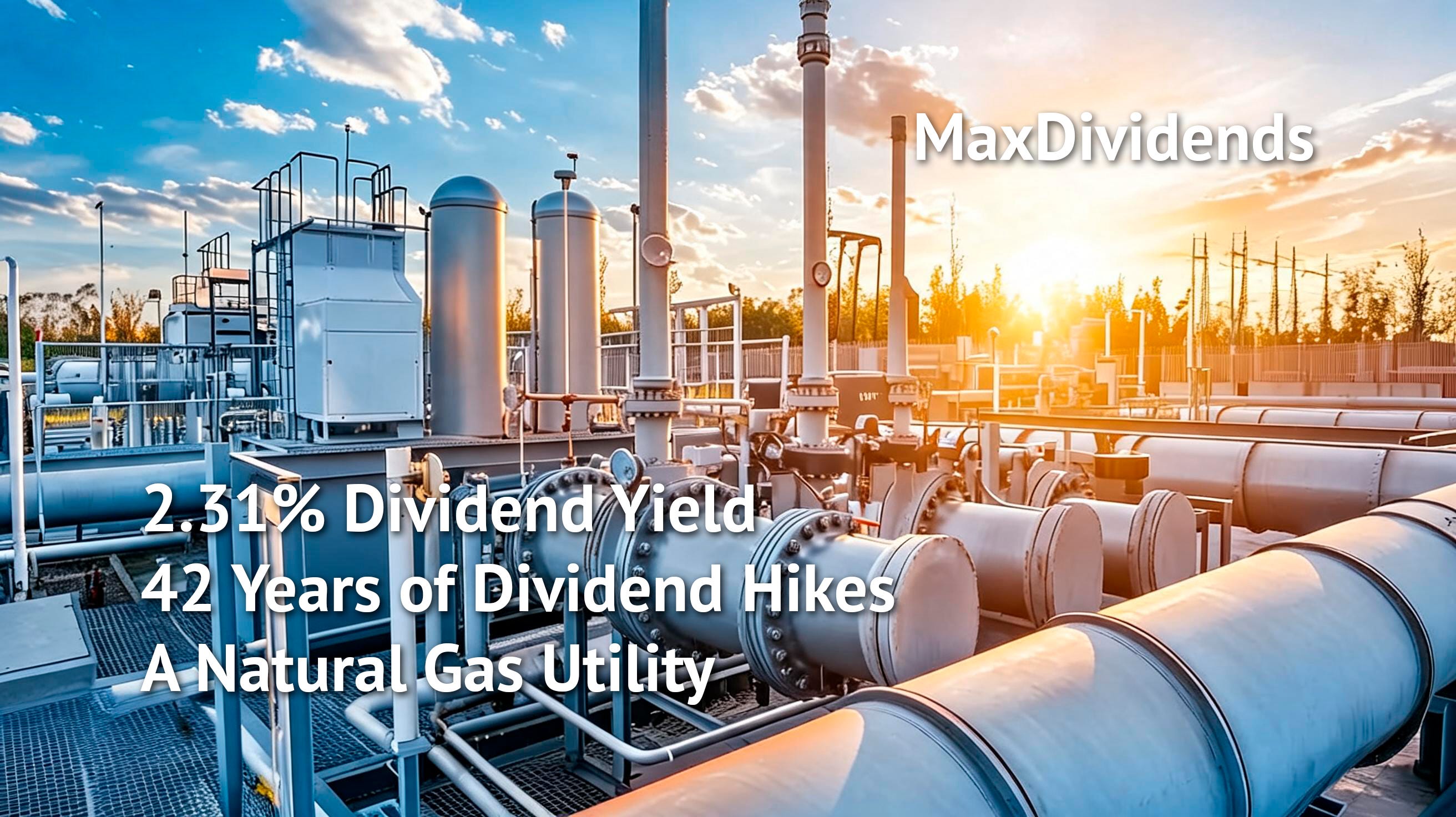
Atmos pays $4.00 per share annually, which gives it a 2.31% yield and a 49.14% payout ratio, so the dividend is covered without the company having to squeeze the balance sheet for applause. The streak is the real headline here: 42 consecutive years of dividend growth, with a 5-year dividend growth rate of +54.00%, tells you management has treated the payout like a core part of the shareholder case, not a leftover. For a regulated gas utility, that’s the sweet spot — enough room to keep funding pipes and safety work, but not so much payout pressure that the dividend turns into a hostage negotiation.
Q2 fiscal 2026: strong earnings, with the utility machine still humming
For the second fiscal quarter ended March 31, 2026, reported on May 6, Atmos generated net income of $984.9 million, or $5.92 per diluted share, up from $3.03 a year earlier, on revenue of about $1.96 billion. Operating income reached $764.8 million, and the company said over 85% of its capital expenditures were directed toward safety and reliability projects, which is the kind of line you like to see from a utility that wants its growth to be durable rather than decorative. The quarter also showed a pipeline-and-storage contribution that kept helping the overall earnings mix, which matters because it gives Atmos a little more leverage than a pure distribution-only name.
Growth is coming from the boring stuff that actually works
Atmos is still growing the old-fashioned way: by investing heavily in the system it already owns and then getting paid more for a stronger, safer, larger network. Management said fiscal 2026 capital expenditures were running at about $2.0 billion, with the vast majority aimed at safety and reliability, and the company has invested more than $15 billion over the last eleven years to modernize and expand its gas systems. That spending supports rate base growth, new rate implementations, and a steady pipeline of approved returns, which is why the company can guide to 6% to 8% earnings and dividend growth through fiscal 2027. In utility terms, that is not flashy, but it is exactly the kind of machine you want when you care more about consistency than adrenaline.
How a Texas gas company turned into a modern utility compounder
Atmos has one of those histories that sounds old-school because it is old-school. It started in 1906, evolved through decades of utility reshuffling, and ended up as a natural gas-only business with a very clear identity: keep gas flowing, keep it safe, and keep the infrastructure funded. The company’s longevity matters because utilities with long operating histories tend to know exactly where the bodies are buried, figuratively speaking, when it comes to regulation, capital recovery, and maintenance. That kind of institutional memory does not show up in a headline, but it absolutely shows up in the stability of the business model.
Final Take – A classic utility with real operating momentum
Atmos Energy gives investors a 2.31% yield, $4.00 annual dividend, 49.14% payout ratio, 42 years of dividend hikes, and +54.00% five-year dividend growth, all supported by a regulated gas network that keeps benefiting from capital investment and rate-base expansion. Q2 fiscal 2026 delivered $1.96 billion in revenue, $984.9 million in net income, $764.8 million in operating income, and $5.92 diluted EPS, with management still leaning hard into safety, reliability, and long-term growth. Financial Score: 87. That is a strong utility profile, but not bulletproof; the moat is real, though it still depends on regulation, capital discipline, and a gas system that has to keep earning its keep in a changing energy landscape.
Someone’s sitting in the shade today because someone planted a tree a long time ago. ― Warren Buffett.
Learn the MaxDividends Way
Start Here
🔑 Explore the Premium Hub (exclusive — upgrade to unlock)
Guides & Step-by-Step
Deep Insights
📖 I ❤️ Dividends: Why I Believe Dividend Investing Is the Best Strategy | E-Book
How Effective is the MaxDividends Strategy for Building Growing Passive Income
Help & Support
Got a question about dividends? Ask Max, your AI Dividend Assistant!
Didn’t get the answer you need? Reach out: max@maxdividends.app or team@maxdividends.app — we’ll help you out.