


This is the kind of business Wall Street usually ignores until winter hits and everyone suddenly remembers how valuable a reliable gas utility really is. It earns its keep by moving natural gas through regulated pipes, serving homes and businesses that need heat, cooking fuel, and industrial energy, and then getting paid through a rate base that grows as infrastructure spending climbs. That makes it boring in the best possible way: predictable demand, regulator-approved returns, and enough capital spending to keep the next round of rate increases on the table.
Spire (SR)
Financial Score: 84 / 99
Quick Tip
To keep your portfolio strong, stay on top of the financials for each company you hold. Solid companies mean better returns, so be sure to check in on their quarterly and annual numbers.Interesting stocks usually score 80+ on the Financial Scale, with top players hitting 90+. If that score dips below 80, it might be a good time to consider cutting ties before things take a turn.Spire (SR) is a St. Louis-based gas utility with operations centered on regulated natural gas distribution and transportation across Missouri, Alabama, and Mississippi, plus a smaller gas marketing and midstream footprint. The company has spent decades expanding its utility network through infrastructure investment and selective growth projects, and its business model is built around moving molecules through pipes rather than chasing hype cycles. That gives it a classic utility profile: slow, steady, and dependent on approved rates rather than consumer mood swings.
Dividend engine: steady hikes, sensible coverage
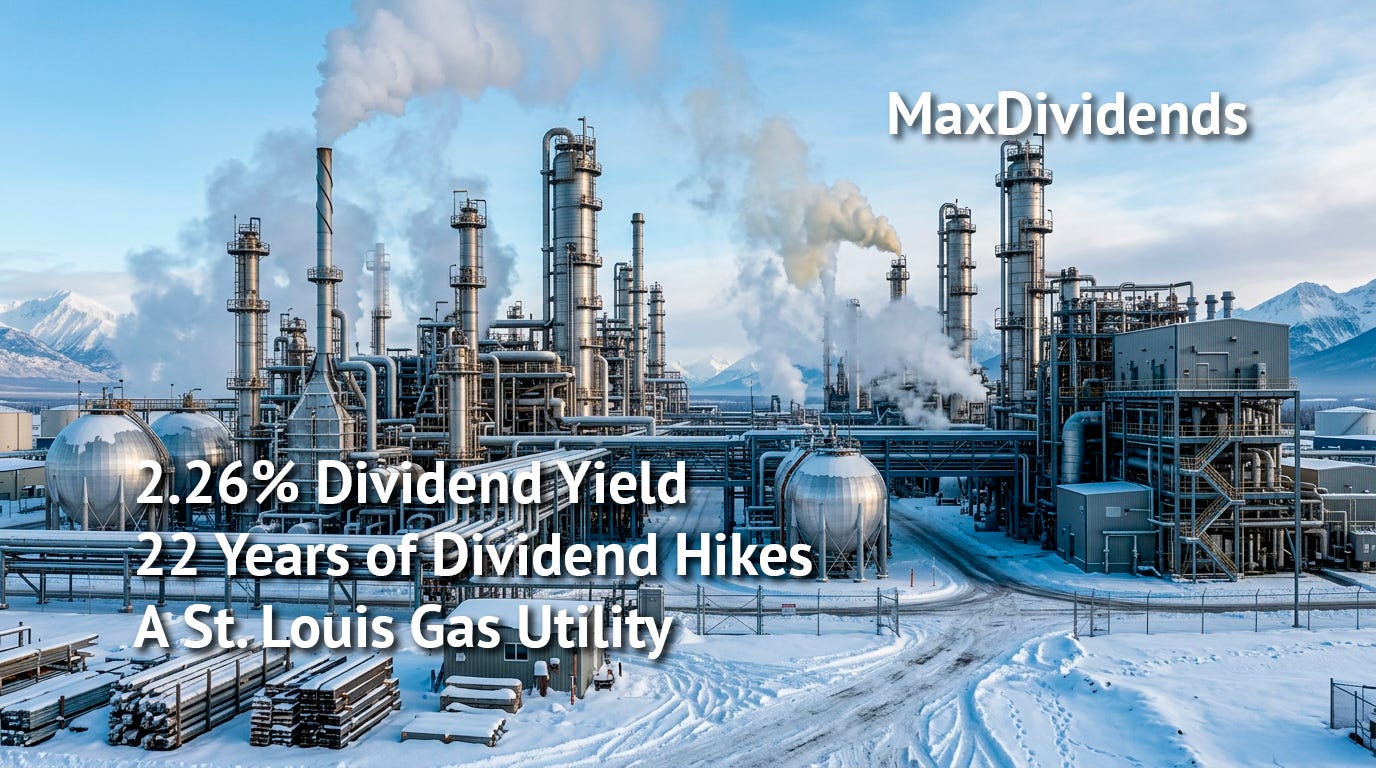
Spire pays $3.80 per share annually, which translates to a 2.26% yield and a 58.00% payout ratio, so the dividend is not overreaching for the balance sheet. The company has lifted the payout for 22 consecutive years, and the 5-year dividend growth rate of +26.00% shows a board that prefers disciplined growth over flashy overpromises. For a regulated gas utility, that is a pretty comfortable setup: the cash flow base is supported by essential service demand, and the payout leaves enough room for infrastructure spending, debt management, and the occasional rate-case hiccup without turning the dividend into a rescue story.
Q2 fiscal 2026: solid operating earnings, softer revenue
For the fiscal second quarter ended March 31, 2026, reported on May 6, Spire posted adjusted earnings of $3.76 per share, up from $3.60 a year earlier, on revenue of about $1.02 billion, which came in below expectations. Operating income rose to $303.5 million, and full-year guidance was raised to $5.40 to $5.60 per share, which matters more than the revenue miss because it tells you management still sees healthy earnings power from the regulated base. In utility land, a quarter can look a little messy while the rate base keeps quietly doing the heavy lifting, and that is basically what Spire is selling here: not speed, but visibility.
Growth is coming from pipes, not slogans
Spire’s growth story is less about finding a new toy and more about deepening the value of the assets it already owns. The company has been pushing capital into storage, transmission, and distribution projects that expand the rate base and support future returns, which is exactly how a utility earns the right to grow. The recently announced fiscal Q2 call also showed that management is still actively shaping the portfolio and talking through earnings guidance, which suggests the company is not just defending territory but still working the regulatory machinery to widen earnings over time. That kind of growth is unglamorous, but for income investors it is often the kind that survives the longest.
How a Midwest utility became a winter cash machine
Spire’s story is tied to the old utility playbook: build pipes where demand is unavoidable, keep them regulated, and let decades of service turn into a durable franchise. It sits in markets where winter heating demand makes natural gas especially sticky, and its value proposition has always been that customers may grumble, but they still need heat. That is why gas utilities often look sleepy from the outside and incredibly useful from the inside. The best part is that the business does not need to be exciting to be effective; it just needs to keep flowing through cold snaps, rate cases, and the slow grind of infrastructure renewal.
Final Take – A utility that earns its keep the slow way
Spire gives investors a 2.26% yield, a $3.80 annual dividend, a 58.00% payout ratio, 22 years of dividend hikes, and +26.00% five-year dividend growth, all backed by a regulated gas network that is built for consistency rather than drama. Fiscal Q2 2026 showed $1.02 billion of revenue, $303.5 million of operating income, and $3.76 of adjusted EPS, while management lifted full-year guidance to $5.40 to $5.60 per share. Financial Score: 84. That is a respectable utility score, but not bulletproof; the main risks are regulatory pressure and weather-related volatility, yet the combination of essential service demand, rate-base growth, and long dividend history keeps it in the conversation for patient income investors.
Someone’s sitting in the shade today because someone planted a tree a long time ago. ― Warren Buffett.
Learn the MaxDividends Way
Start Here
🔑 Explore the Premium Hub (exclusive — upgrade to unlock)
Guides & Step-by-Step
Deep Insights
📖 I ❤️ Dividends: Why I Believe Dividend Investing Is the Best Strategy | E-Book
How Effective is the MaxDividends Strategy for Building Growing Passive Income
Help & Support
Got a question about dividends? Ask Max, your AI Dividend Assistant!
Didn’t get the answer you need? Reach out: max@maxdividends.app or team@maxdividends.app — we’ll help you out.