

This healthcare operator is improving profits without growing revenue. Medical expenses consume a smaller share of premiums, while its clinical and pharmacy businesses focus on profitability over size. The latest quarter showed progress, although favorable revisions to earlier claims estimates also helped. The question is how much improvement can last.
UnitedHealth Group (UNH)
Business Quality Score: 87 / 99
Quick Tip
To keep your portfolio strong, stay on top of the financials for each company you hold. Solid companies mean better returns, so be sure to check in on their quarterly and annual numbers.
—
Interesting stocks usually score 80+ on the Financial Scale, with top players hitting 90+. If that score dips below 80, it might be a good time to consider cutting ties before things take a turn.
UnitedHealth Group combines UnitedHealthcare’s insurance operations with Optum’s care delivery, pharmacy services, and healthcare technology businesses. Its roots stretch to Charter Med in 1974. The group both finances treatment and provides healthcare services, diversifying revenue but exposing multiple businesses to rising medical costs.
Dividend growth with an earnings cushion
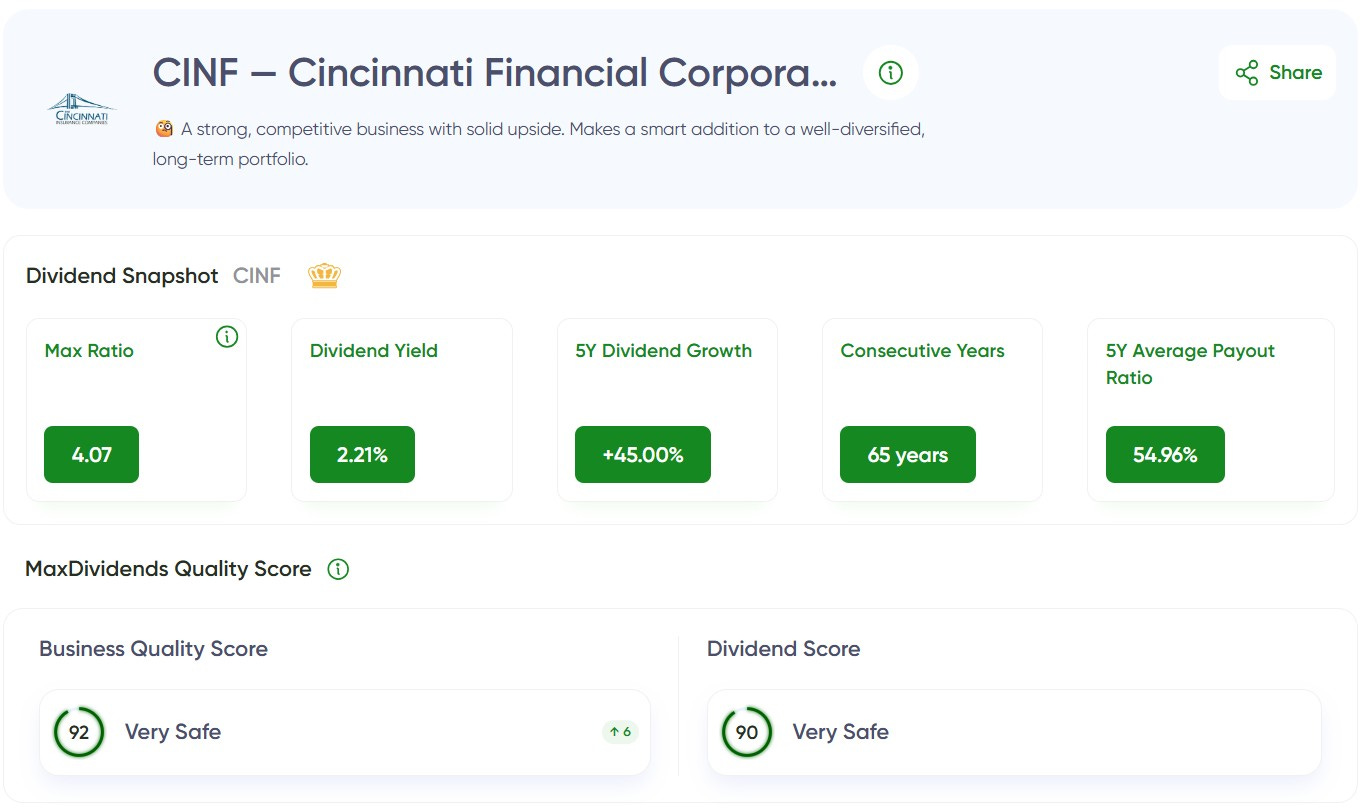
UnitedHealth pays $9.28 per share annually, a 2.18% yield, with 16 consecutive years of increases and +80.75% five-year dividend growth. The 53.00% payout ratio leaves nearly half of earnings retained, providing a meaningful cushion. Further increases depend on earnings and cash generation keeping pace with medical expenses—not simply on maintaining the historical streak.
Q3 2026: profits recover as sales soften
The October 13, 2026 release reported Q3 revenue of $112.7 billion, down 0.4%, operating earnings of $6.6 billion, and a 3.6% net margin. GAAP EPS rose to $4.56 from $2.59; adjusted EPS reached $4.69 versus $2.92. Operating cash flow totaled $5.1 billion. The medical care ratio improved to 88.4% from 89.9%, and management raised full-year adjusted EPS guidance to at least $20.50.
Pharmacy and home care provide expansion points
External clients now represent more than half of Optum Rx’s covered members. Pharmacy operating earnings increased to $1.7 billion from $1.5 billion, supported by biosimilar adoption and operational improvements. Separately, Optum Health reported 10% growth in home health visits and 27% growth in online self-scheduling. These gains coexist with broader restructuring.
Selling tools to competing insurers
Optum’s technology business grew from Ingenix, established in 1996 to consolidate healthcare information services. It analyzed claims and supplied reimbursement tools to other insurers, not just UnitedHealthcare. The group therefore developed an unusual second business: selling services to other participants in the market where its own insurer competed.
Final take
Some experts emphasize improving medical cost ratios and raised guidance; others highlight shrinking membership and claims-reserve revisions that helped earnings. The 53.00% payout supports dividend coverage, but lasting growth requires recurring profits to strengthen. Business Quality Score: 87—a strong level, below the elite 90+ category. The central uncertainty is whether pricing and operating reforms sustain margin recovery after temporary benefits fade.